

POST BY

aura solution
PUBLISHED
September 24, 2026
CATEGORY
Development
aura solution
Web Developer
Introduction
Choosing a White Label digital marketing partner is an important decision for any agency.
The right partnership can help your agency expand its service offering, manage additional client demand, access specialized expertise, and scale without immediately building every capability in-house.
But choosing the wrong partner can create the opposite result.
Poor-quality work, missed deadlines, communication problems, inconsistent delivery, and confidentiality concerns can all affect your client relationships and your agency’s reputation.
This is because, from the client’s perspective, the work is still associated with your agency.
Your White Label partner may work behind the scenes, but your agency remains responsible for the client experience.
That means choosing a partner should involve more than comparing prices.
You need to understand whether the provider can consistently deliver work that meets your standards while supporting the way your agency operates.
In this guide, we’ll explore the most important factors to consider when choosing a White Label digital marketing partner and how to build a relationship that supports long-term agency growth.
Why Choosing the Right Partner Matters
White Label fulfillment is often presented as a simple process.
An agency finds a provider, sends them work, receives the completed deliverables, and presents them to the client.
In reality, a successful partnership involves much more.
Your fulfillment partner can influence:
- Quality of Work
- Client Satisfaction
- Project Timelines
- Internal Efficiency
- Profit Margins
- Your Agency’s Reputation
- Ability to Scale
For example, imagine your agency wins several new clients for SEO services.
You have a White Label provider ready to handle the technical fulfillment.
If the provider delivers strong work on time and communicates clearly, your agency can focus on strategy and client relationships.
However, if the provider consistently misses deadlines or requires extensive revisions, your internal team may spend significant time managing problems.
Instead of creating efficiency, the partnership can create additional pressure.
This is why agencies should view a White Label provider as more than a supplier.
The right partner becomes an extension of your operational capacity.
Start by Understanding What Your Agency Actually Needs
Before searching for a White Label partner, define what you are looking for.
Different agencies have different requirements.
You may need support for a single service.
For example:
- SEO
- Website Development
- Website Maintenance
- Graphic Design
- Social Media Management
- Video Editing
- Mobile App Development
Or you may be looking for a broader partner capable of supporting multiple areas of your agency’s service offering.
Start by asking:
- Which services do we need help with?
- Do we need short-term capacity or long-term support?
- How many projects do we expect each month?
- What level of expertise is required?
- What turnaround times do our clients expect?
- How much internal project management can we provide?
- Do we expect demand to grow?
Having clear answers to these questions can make it easier to identify partners that actually fit your agency.
Without this clarity, it is easy to choose a provider based on an attractive price or service list without considering whether their delivery model matches your needs.
Evaluate the Quality of Their Work
Quality should be one of the first areas you evaluate.
Your clients are trusting your agency to deliver professional work.
If the final deliverables do not meet expectations, the client is unlikely to separate your agency from the White Label provider working behind the scenes.
Review examples of the partner’s work carefully.
Depending on the service, this may include:
- SEO Case Studies
- Website Projects
- Design Portfolios
- Social Media Campaigns
- Video Examples
- Mobile Applications
- Technical Projects
However, do not evaluate quality only by looking at a few impressive portfolio examples.
Try to understand whether the provider can deliver consistently across different projects and industries.
Ask questions such as:
- How do you maintain quality?
- Who reviews the work before delivery?
- How do you manage revisions?
- How do you handle client-specific requirements?
- Can you adapt to different brand guidelines?
- How do you manage complex projects?
A strong partner should have systems in place rather than relying entirely on individual effort.
Look Beyond the Portfolio
A portfolio can show you what a provider is capable of producing.
It does not always show you what working with that provider will be like.
A successful White Label relationship also depends on:
- Communication
- Organization
- Reliability
- Responsiveness
- Project Management
- Problem Solving
This is why a provider should be evaluated based on both the quality of the work and the quality of the working relationship.
For example, a highly talented team may still create challenges if communication is slow or project information is poorly managed.
Similarly, a provider with an attractive portfolio may struggle when managing multiple projects simultaneously.
The goal is to find a partner that can deliver good work consistently while fitting into your agency’s workflow.
Communication Can Make or Break the Partnership
Communication becomes especially important when your fulfillment team is working behind the scenes.
Your agency needs to know what is happening with each project so you can manage client expectations effectively.
Look for a partner that provides clear communication around:
- Project Requirements
- Timelines
- Progress
- Questions
- Delays
- Revisions
- Final Delivery
You should not need to spend excessive time trying to find out the status of a project.
A reliable White Label partner should have a clear process for keeping the agency informed.
Before starting a long-term relationship, pay attention to the communication process during the early stages.
For example:
- How quickly do they respond?
- Are their answers clear?
- Do they ask useful questions?
- Do they understand the project requirements?
- Are timelines communicated realistically?
The way a provider communicates before the partnership begins can often provide insight into how they will communicate after they receive your projects.
Assess Their Range of Expertise
A growing agency may need support across multiple services.
For example, a client who initially needs a website may later require:
- SEO
- Website Maintenance
- Graphic Design
- Social Media Management
- Video Editing
Working with multiple providers is possible.
However, managing several separate fulfillment relationships can increase operational complexity.
A White Label partner with expertise across multiple digital services may provide additional flexibility.
This can allow your agency to expand its service offering without needing to establish a new fulfillment relationship for every capability.
At the same time, a broad service list alone does not guarantee expertise.
Ask how each service is delivered.
For example:
- Do they have dedicated specialists?
- How experienced is the team?
- What type of projects do they typically handle?
- How is quality managed across different services?
The ideal partner should have both the range of services you need and the expertise required to deliver them well.
Check Whether They Can Scale With Your Agency
The right partner for your agency today may not necessarily be the right partner a year from now.
Consider your future plans.
You may currently need support for:
- A Few Projects Each Month
- One Specific Service
- Temporary Capacity
But what happens if your agency wins several new clients?
Can the provider manage the increased workload?
Ask about:
- Available Capacity
- Team Size
- Project Management Systems
- Turnaround Times
- Ability to Handle Larger Volumes
- Process for Managing Increased Demand
Scalability does not simply mean having more people available.
It also means having systems that can maintain quality as the volume of work increases.
A provider that performs well with two projects but struggles with twenty may eventually limit your agency’s growth.
Reliability Is More Important Than Promises
Most providers will promise:
- High Quality
- Fast Turnaround
- Competitive Pricing
- Excellent Support
The more important question is whether they can deliver consistently.
Look for evidence of reliability.
This may include:
- Case Studies
- Long-Term Client Relationships
- Testimonials
- Established Processes
- Consistent Communication
- Realistic Timelines
Be cautious of promises that sound too good to be true.
For example, extremely low prices combined with unusually fast turnaround times and unlimited revisions may not always create a sustainable delivery model.
A good White Label partner should be transparent about what they can realistically deliver.
It is generally better to work with a provider who gives you a realistic timeline and consistently meets it than one who promises everything immediately and repeatedly misses deadlines.
Understand Their Pricing Structure
Pricing matters because your agency still needs to maintain healthy margins.
However, the cheapest provider is not always the most profitable choice.
A low fulfillment cost can become expensive if it leads to:
- Poor Quality
- Additional Revisions
- Project Delays
- Client Complaints
- More Internal Management Time
Instead of comparing only the initial price, evaluate the total value.
Understand:
- Standard Pricing
- Project-Based Costs
- Monthly Costs
- Revision Policies
- Additional Charges
- Rush Fees
- Minimum Commitments
You should also consider how predictable the pricing structure is.
Unexpected costs can make it difficult to price your own services and protect your margins.
A transparent provider makes it easier for your agency to plan.
Protect Confidentiality and Your Client Relationships
One of the most important parts of a White Label relationship is confidentiality.
Your clients should remain your clients.
The fulfillment partner should understand the boundaries of the relationship and operate behind the scenes.
Before working together, discuss:
- Non-Disclosure Agreements
- Client Confidentiality
- Ownership of Work
- Access to Client Information
- Communication Boundaries
- Data Security
The goal is to create a relationship where you can confidently share the information necessary to complete projects without worrying about your client relationships.
A professional White Label provider should understand why these protections are important.
Consider Their Project Management Process
Even excellent specialists need an organized process.
Ask the potential partner how projects move from initial briefing to final delivery.
A strong workflow may include:
- Project Intake
- Requirement Review
- Assignment to the Appropriate Specialist
- Production
- Internal Quality Review
- Revision Management
- Final Delivery
Understanding this process helps you determine how easily the provider can integrate with your agency.
You should also know:
- How projects are submitted
- How feedback is provided
- Who your point of contact will be
- How progress is tracked
- How urgent requests are handled
The simpler and clearer the workflow, the easier it may be to manage projects as your volume grows.
Test the Relationship Before Committing to a Large Volume
You do not always need to commit to a major long-term relationship immediately.
A smaller project can help you evaluate the provider in a real working environment.
During a test project, pay attention to:
- Quality
- Communication
- Attention to Detail
- Understanding of the Brief
- Turnaround Time
- Revision Process
- Professionalism
A test project can reveal issues that are difficult to identify through sales calls or portfolio reviews.
It also gives both sides an opportunity to understand whether the working relationship is a good fit.
The goal is not simply to see whether the provider can complete the technical work.
You are evaluating whether they can become a reliable part of your agency’s delivery process.
Don’t Ignore Cultural and Working-Style Compatibility
A partnership can involve highly skilled people on both sides and still become difficult if the working styles are incompatible.
For example, your agency may require:
- Detailed Documentation
- Frequent Updates
- Fast Responses
- Collaborative Planning
Another provider may operate with a more independent and limited communication model.
Neither approach is necessarily wrong.
But the partnership needs to fit the way your agency works.
Discuss expectations early.
Make sure both sides understand:
- Communication Frequency
- Project Ownership
- Approval Processes
- Working Hours
- Escalation Procedures
- Responsibilities
Clear expectations can prevent unnecessary misunderstandings later.
The Right Partner Should Make Your Agency Stronger
Ultimately, a White Label partnership should create value for your agency.
The right partner should help you:
- Expand Your Service Offering
- Manage More Client Demand
- Access Specialized Expertise
- Improve Operational Flexibility
- Maintain Consistent Quality
- Scale More Efficiently
If managing the provider requires excessive time, constant follow-ups, or repeated corrections, the partnership may not be providing the value your agency needs.
The best relationships often feel like an extension of your own team.
The fulfillment partner understands your requirements, follows clear processes, communicates effectively, and delivers work you can confidently present to your clients.
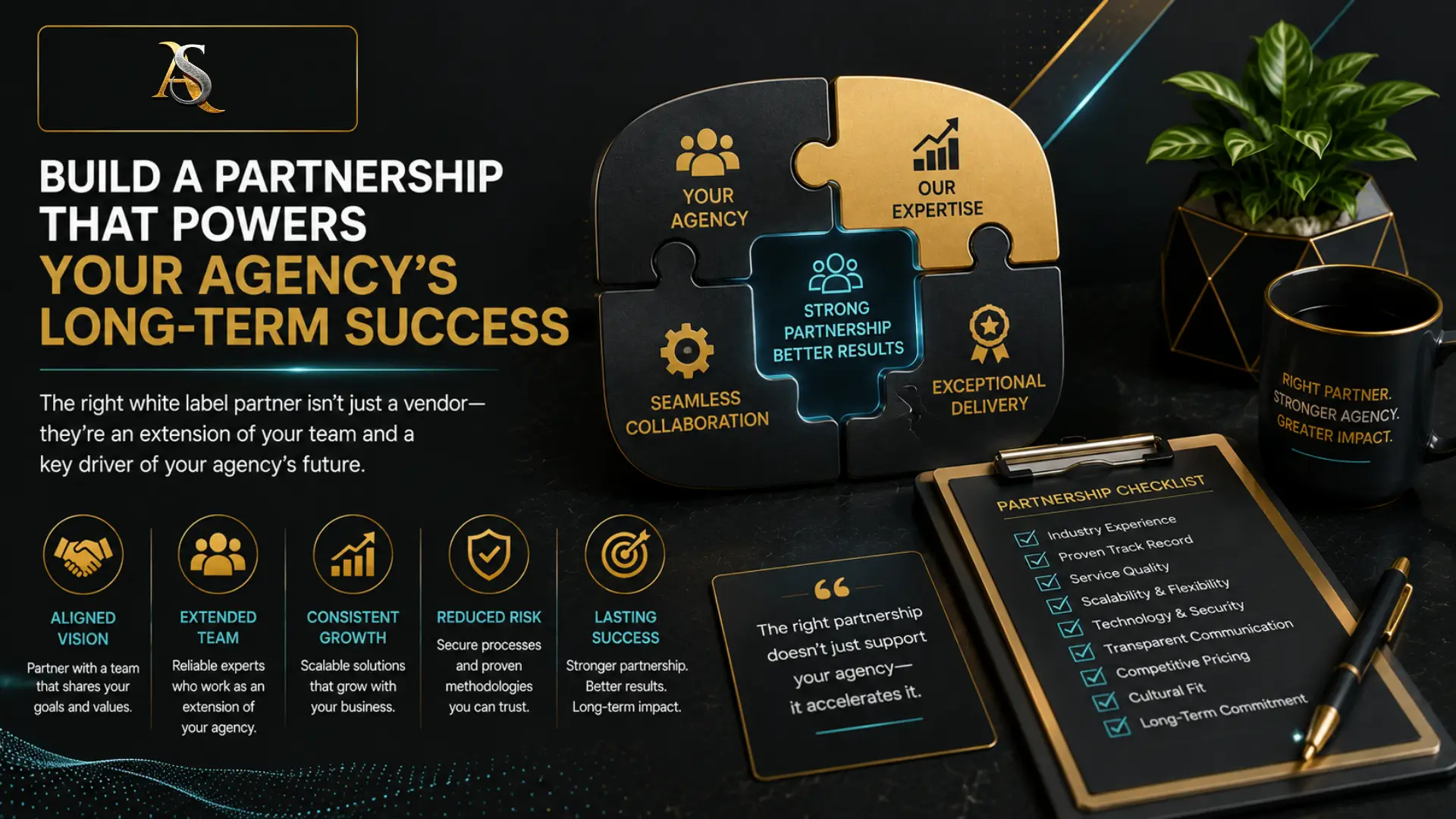
What to Look for Before Choosing a White Label Digital Marketing Partner
Choosing a White Label digital marketing partner should involve more than reviewing a portfolio and comparing prices.
A successful partnership depends on how well the provider can support your agency’s workflow, quality standards, client expectations, and future growth.
Before committing to a long-term relationship, it is important to understand exactly how the provider works.
The questions you ask during the evaluation process can help you identify potential problems before they affect your clients.
In this section, we’ll look at the key areas agencies should evaluate and the questions worth asking before choosing a White Label digital marketing partner.
Ask About Their Experience and Expertise
Experience matters, particularly when your agency is trusting another team to deliver work that will ultimately represent your brand.
Start by understanding the provider’s background.
Ask questions such as:
- How long have you been providing White Label services?
- Which industries do you have experience working with?
- Which services are handled by your internal team?
- Do you have specialists for different areas?
- What types of projects do you typically manage?
- Can you provide relevant examples of previous work?
The goal is not simply to find the provider with the longest history.
A newer provider may have an experienced team and strong processes.
Instead, try to understand whether their expertise matches the type of work your agency plans to send them.
For example, an agency focused primarily on small business websites may have different requirements from an agency managing complex enterprise-level digital projects.
The right partner should understand the level of work you need to deliver.
Understand Who Will Actually Complete the Work
One important question that agencies sometimes overlook is:
Who is actually doing the work?
Some White Label providers have dedicated internal teams.
Others may rely on freelancers, subcontractors, or additional third-party providers.
There is no single model that is automatically better.
However, your agency should understand the delivery structure.
Ask:
- Is the work completed by an in-house team?
- Do you work with external specialists?
- How are team members selected?
- Who is responsible for quality control?
- How do you maintain consistency across projects?
The purpose is transparency.
You need to know how the provider manages the people responsible for your client work.
A clear delivery structure can also make it easier to understand how the provider will manage increased project volume.
Ask About Their Capacity and Scalability
A provider may be capable of delivering excellent work for a small number of projects.
But what happens when your agency grows?
Before committing to a partnership, discuss capacity.
Ask:
- How many projects can you manage at one time?
- What happens when project volume increases?
- Do you have additional specialists available?
- How do you manage busy periods?
- Will turnaround times change as volume increases?
- How do you maintain quality while scaling?
Your agency does not need unlimited capacity.
But you should understand whether the provider can realistically support your expected growth.
A good partner should be honest about their limitations.
It is better to have realistic expectations than discover capacity problems after promising timelines to multiple clients.
Compare Turnaround Times Carefully
Fast delivery can be valuable.
However, the fastest promised turnaround is not always the most important factor.
A provider that promises extremely fast delivery but regularly misses deadlines can create more problems than a provider with a slightly longer but reliable timeline.
Ask about:
- Standard Turnaround Times
- Average Project Duration
- Rush Options
- Revision Turnaround
- How Delays Are Communicated
- What Happens When Requirements Change
It is also useful to compare their timelines with your own client commitments.
For example, if your provider needs ten business days to complete a project, your agency needs to include additional time for:
- Internal Review
- Quality Control
- Client Feedback
- Revisions
Your client-facing timeline should account for the complete delivery process, not only the provider’s production time.
Understand Their Quality Control Process
Your White Label partner should not simply complete the work and immediately send it to your agency.
A strong provider should have some form of internal review process.
Ask:
- Is work reviewed before delivery?
- Who performs the quality check?
- Do you use service-specific checklists?
- How are errors handled?
- What happens if work does not meet the agreed requirements?
Quality control is especially important as project volume increases.
Without clear processes, consistency can become difficult to maintain.
Your agency should also maintain its own review process.
Even with an excellent White Label partner, the final responsibility for the client experience remains with your agency.
The strongest approach is often two layers of quality control:
Provider Quality Review → Agency Quality Review → Client Delivery
This can help identify issues before they reach the client.
Review the Revision Process
Revisions are a normal part of many agency services.
However, unclear revision policies can create delays and unexpected costs.
Before beginning a partnership, understand:
- How many revisions are included?
- What qualifies as a revision?
- What is considered additional work?
- How quickly are revisions completed?
- How should feedback be submitted?
- Are there additional charges for major changes?
It is important that your agency’s client-facing revision policy works with the provider’s policy.
For example, if your agency promises unlimited revisions but your fulfillment partner charges for every additional round, your margins may quickly disappear.
Your internal agreements and client agreements should work together.
Compare Pricing Beyond the Basic Rate
A provider’s initial price does not always represent the full cost of working with them.
Before comparing different White Label partners, understand the complete pricing structure.
Ask about:
- Standard Service Pricing
- Project-Based Pricing
- Monthly Packages
- Additional Revision Costs
- Rush Fees
- Setup Fees
- Minimum Commitments
- Additional Service Charges
Transparent pricing makes it easier for your agency to create accurate proposals and maintain healthy margins.
Be cautious when comparing providers based only on the lowest advertised price.
A slightly higher-priced provider may create better value if they deliver stronger quality, fewer revisions, and more reliable communication.
Evaluate Communication Before the Partnership Begins
The early communication process can reveal a great deal about a potential partnership.
Pay attention to:
- Response Times
- Clarity
- Professionalism
- Attention to Detail
- Willingness to Ask Questions
- Understanding of Your Requirements
If communication is already confusing or inconsistent during the sales process, it may become more challenging once multiple projects are involved.
A strong provider should make it clear:
- Who your main point of contact will be
- How projects should be submitted
- How updates will be shared
- Where feedback should be provided
- How urgent issues are handled
Clear communication can significantly reduce unnecessary project management time.
Ask How They Handle Problems and Delays
Every business can experience unexpected issues.
Projects may be delayed.
Requirements may change.
Technical problems may occur.
The important question is how the provider handles these situations.
Ask:
- How do you communicate delays?
- Who should we contact if there is an urgent issue?
- What is your escalation process?
- How do you resolve quality concerns?
- What happens if a project cannot be completed as planned?
A reliable partner should not hide problems until the deadline has already passed.
Early communication gives your agency more time to manage expectations and find solutions.
Protect Client Confidentiality
A White Label partnership should protect your agency’s client relationships.
Before sharing client information, discuss:
- Confidentiality Agreements
- Non-Disclosure Agreements
- Data Access
- Client Information Storage
- Ownership of Deliverables
- Direct Client Communication
- Non-Solicitation Expectations
Your agency should be clear about who owns the client relationship and how client information will be handled.
The provider should operate within the boundaries agreed by both businesses.
Confidentiality is not simply a legal requirement.
It is also an important part of building trust.
Understand Their Technology and Project Management Systems
You do not necessarily need to use the same software as your White Label provider.
However, you should understand how projects are managed.
Ask:
- How are projects submitted?
- How is progress tracked?
- Where are files stored?
- How is feedback managed?
- How are approvals documented?
- How are final deliverables provided?
The provider’s system should not create unnecessary complexity for your agency.
The ideal workflow is one that allows information to move efficiently between your team and the fulfillment team.
If your agency handles a high volume of work, project management processes can become increasingly important.
A poorly organized workflow that is manageable with two projects may become chaotic with twenty.
Check Their Ability to Follow Your Brand and Client Requirements
One of the challenges of White Label fulfillment is maintaining consistency across different clients.
Your partner may need to work with multiple:
- Brand Guidelines
- Industries
- Target Audiences
- Writing Styles
- Design Preferences
- Technical Requirements
Ask how they manage client-specific information.
For example:
- Do you create separate project briefs?
- How are brand guidelines stored?
- How do specialists access the correct information?
- How do you prevent details from one project being applied to another?
The provider should have a process for organizing client information clearly.
This becomes increasingly important as your agency sends more projects.
Look for Warning Signs Before You Commit
Not every potential partner will be the right fit.
Some warning signs may include:
Extremely Low Prices With Unrealistic Promises
Be cautious of providers promising exceptional quality, immediate delivery, and unlimited revisions at prices that appear difficult to sustain.
Poor Communication
Slow, unclear, or inconsistent communication before the partnership begins can be an indication of future operational challenges.
No Clear Process
If the provider cannot clearly explain how projects move from briefing to delivery, managing larger volumes may become difficult.
Limited Transparency
A professional partner should be willing to explain how they work, how pricing is structured, and how projects are managed.
Inconsistent Quality
A portfolio may contain excellent examples, but if the overall quality varies significantly, consistency may become a concern.
Pressure to Commit Immediately
A provider should be confident enough to allow your agency to evaluate whether the partnership is a good fit.
If you feel pressured to make a large commitment before understanding how they work, consider taking a step back.
Create a Comparison Framework
When evaluating multiple White Label partners, avoid relying only on general impressions.
Create a simple comparison framework.
For each provider, evaluate:
Evaluation Area | Questions to Consider |
Quality | Does the work meet our standards consistently? |
Expertise | Do they understand the services and industries we serve? |
Communication | Are they clear, responsive, and organized? |
Capacity | Can they support our current and future workload? |
Turnaround | Are their timelines realistic and reliable? |
Pricing | Can we maintain healthy margins? |
Revisions | Is the revision process clear and manageable? |
Confidentiality | Are client relationships and information protected? |
Scalability | Can they grow with our agency? |
Working Style | Does their process fit our agency? |
This does not mean every provider must score perfectly in every category.
Instead, it helps you compare potential partners based on the factors that actually matter to your agency.
Start With a Test Project
Before transferring a large number of client projects, consider starting with a smaller test project.
A test project allows you to evaluate the complete working relationship.
Pay attention to:
- How quickly the project is acknowledged
- Whether the brief is understood
- The quality of communication
- Whether questions are asked when needed
- Turnaround time
- Quality of the final work
- Internal quality control
- Revision handling
The test project should be treated as a realistic example of how you expect future work to be managed.
Avoid sending an unusually simple project that does not represent your typical client requirements.
The goal is to understand how the provider performs under normal working conditions.
Make Expectations Clear From the Beginning
A successful White Label partnership depends on clear expectations from both sides.
Before sending regular work, discuss:
- Scope of Services
- Pricing
- Turnaround Times
- Communication
- Revision Policies
- Quality Standards
- Confidentiality
- Escalation Procedures
- Payment Terms
- Capacity Expectations
Documenting these expectations can prevent misunderstandings later.
The more clearly both sides understand their responsibilities, the easier it becomes to build a reliable workflow.
Build the Partnership, Not Just the Transaction
The strongest White Label relationships are often built over time.
As the fulfillment partner becomes more familiar with your agency’s standards, processes, and preferences, the delivery process can become more efficient.
The provider learns:
- How your agency communicates
- What level of quality you expect
- How you structure projects
- Which details are most important to your clients
At the same time, your agency learns how to provide better briefs, manage timelines, and work effectively with the fulfillment team.
This shared understanding can reduce friction and improve efficiency as the relationship develops.
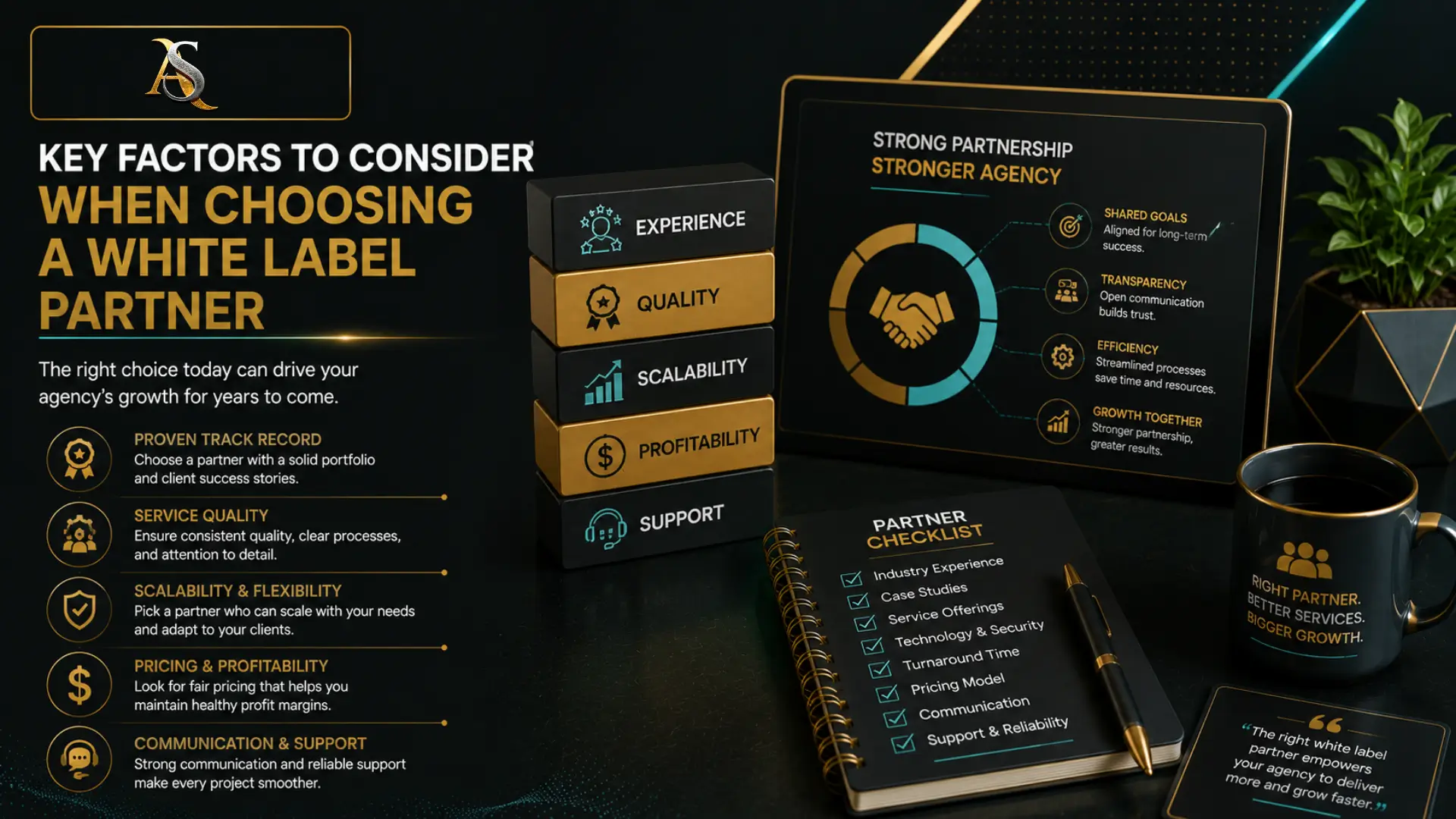
How to Make the Right Choice When Selecting a White Label Digital Marketing Partner
Choosing a White Label digital marketing partner is not simply about finding a provider that offers the services you need.
The decision can directly affect your agency’s ability to deliver quality work, maintain client satisfaction, protect its reputation, and scale successfully.
By this stage, you should have a clear understanding of what your agency needs and the factors that should be considered when evaluating potential partners.
The final step is turning that information into a structured decision.
Rather than choosing a provider based only on price, portfolio, or a sales conversation, use a process that allows you to compare potential partners from both an operational and long-term perspective.
A Step-by-Step Framework for Choosing the Right Partner
A structured evaluation process can help reduce the risk of making a decision based on first impressions.
Step 1: Define Your Agency’s Requirements
Start with your own business.
Before deciding which provider is right for you, clearly define what you need.
Consider:
- Services Required
- Expected Project Volume
- Type of Clients You Serve
- Required Turnaround Times
- Quality Standards
- Budget
- Desired Profit Margins
- Communication Requirements
- Future Growth Plans
For example, an agency that needs occasional graphic design support may have very different requirements from an agency looking for a long-term partner to manage SEO, website development, and ongoing digital marketing fulfillment.
The clearer your requirements, the easier it becomes to eliminate providers that are not the right fit.
Step 2: Create a Shortlist of Potential Partners
Once you understand your requirements, create a shortlist of potential providers.
Avoid making your decision based on the first company you find.
Compare several options where possible.
For each potential partner, gather information about:
- Available Services
- Experience
- Portfolio
- Pricing Structure
- Communication Process
- Turnaround Times
- Revision Policy
- Quality Control
- Capacity
- Confidentiality
A shortlist makes it easier to compare providers objectively.
It also gives you a better understanding of what different fulfillment models and pricing structures are available.
Step 3: Compare the Complete Value, Not Just the Price
Price is important.
Your agency needs enough margin to operate profitably.
However, the cheapest provider may not create the best value.
Imagine two providers.
Provider A charges less but requires frequent follow-ups, delivers inconsistent work, and regularly needs multiple revisions.
Provider B charges more but communicates clearly, follows the brief, and consistently delivers work on time.
The initial fulfillment cost may be higher with Provider B.
But when you consider internal management time, revisions, delays, and client satisfaction, Provider B may create better overall value.
When comparing providers, consider:
- Cost
- Quality
- Reliability
- Communication
- Management Time
- Revision Requirements
- Client Impact
The goal is to understand the total operational cost of the relationship.
Step 4: Ask the Right Questions Before Committing
Before making a final decision, make sure important questions have clear answers.
About Their Services
- Which White Label services do you provide?
- What level of experience does your team have?
- Do you have specialists for different services?
- Can you support the type of clients we serve?
About Their Process
- How are projects submitted?
- Who will be our main point of contact?
- How do you communicate project updates?
- How is work reviewed before delivery?
About Capacity
- How much work can you currently manage?
- How do you handle periods of increased demand?
- Can your team scale with our agency?
About Pricing
- What is included in the standard price?
- Are revisions included?
- Are there additional charges?
- Are there minimum commitments?
About Client Protection
- How is client information protected?
- Are confidentiality agreements available?
- Will you communicate directly with our clients?
- Who owns the final deliverables?
The right partner should be comfortable discussing these areas clearly.
If important questions are avoided or answered vaguely, consider that a warning sign.
Step 5: Start With a Real Test Project
A test project is one of the best ways to evaluate a potential White Label relationship.
Instead of relying entirely on a portfolio, you can see how the provider performs within an actual workflow.
Choose a project that represents the type of work you expect to send regularly.
During the project, evaluate:
- How quickly the provider responds
- Whether they understand the brief
- The questions they ask
- Communication quality
- Project organization
- Turnaround time
- Final work quality
- Revision handling
The final deliverable is important, but the entire process matters.
A technically strong project may still create operational problems if communication is difficult or the project requires excessive management.
Step 6: Review the Results Objectively
After the test project is complete, review the experience using the same criteria you would apply to any other provider.
Ask:
- Did the work meet our quality standards?
- Was the project delivered on time?
- Was communication clear?
- Did the provider understand our requirements?
- How much management was required from our team?
- How were revisions handled?
- Would we feel confident presenting this work to a client?
If multiple team members were involved, collect their feedback.
A structured review can help prevent a decision from being based entirely on one person’s impression.
Step 7: Evaluate Long-Term Compatibility
A provider may perform well on one project but still not be the right long-term partner.
Consider how the relationship would work over time.
Ask:
- Can they manage a larger volume of work?
- Will communication remain effective?
- Can they adapt to new services or client requirements?
- Are their processes organized enough to support growth?
- Does their working style fit our agency?
The ideal White Label partner should not only solve today’s capacity problem.
They should also be capable of supporting where your agency wants to go.
Building a Strong Long-Term White Label Relationship
Choosing the right partner is only the beginning.
The relationship also needs to be managed effectively.
As the partnership develops, both sides can improve the way they work together.
Create Clear Processes From the Beginning
Define a standard process for:
- Submitting Projects
- Creating Briefs
- Communicating Questions
- Providing Feedback
- Managing Revisions
- Reviewing Deliverables
- Handling Urgent Requests
- Escalating Problems
When both sides understand the process, projects can move more efficiently.
Clear systems also reduce the risk of information being lost as project volume increases.
Provide Better Briefs
The quality of the final work often depends on the quality of the information provided at the beginning.
A strong brief should include:
- Client Background
- Project Objectives
- Target Audience
- Deliverables
- Brand Guidelines
- Reference Examples
- Technical Requirements
- Deadlines
- Important Restrictions
Avoid assuming the fulfillment team already understands information that was discussed during a previous project.
Each project should contain the information needed for the team to complete the work successfully.
Communicate Changes Early
Project requirements can change.
Clients may provide new information or adjust their expectations.
When this happens, communicate the changes to your White Label partner as early as possible.
Last-minute changes can affect:
- Timelines
- Costs
- Workload
- Quality
Clear communication gives both sides more time to adjust.
Review Performance Regularly
Do not wait for a major problem before evaluating the relationship.
Review performance periodically.
Look at:
- Delivery Times
- Quality
- Revision Volume
- Communication
- Client Feedback
- Project Costs
Regular reviews can identify small issues before they become larger operational problems.
A good partner should also be open to feedback and process improvements.
Common Mistakes After Choosing a White Label Partner
Even a strong provider can become difficult to work with if the partnership is not managed properly.
Assuming the Provider Knows Everything
Do not assume the fulfillment team automatically understands every client’s preferences.
Provide clear and updated information.
Sending Incomplete Briefs
Missing information often creates additional questions, revisions, and delays.
Create a standard briefing process.
Promising Clients Unrealistic Timelines
Always account for the complete workflow, including:
- Provider Production
- Internal Review
- Client Feedback
- Revisions
Do not base your client deadline solely on the provider’s estimated production time.
Ignoring Small Problems
Repeated small issues can eventually become larger problems.
Address concerns early.
Changing Providers Too Frequently
Switching providers repeatedly can create additional work and inconsistency.
Give a promising partnership enough time to develop, but continue to monitor performance.
When Should You Reconsider the Partnership?
Not every White Label relationship will remain the right fit forever.
Your agency may outgrow a provider, change its service offering, or develop new requirements.
It may be time to reconsider the relationship if you experience ongoing problems such as:
- Consistent Quality Issues
- Repeated Missed Deadlines
- Poor Communication
- Lack of Transparency
- Difficulty Managing Increased Volume
- Unexpected Pricing Changes
- Confidentiality Concerns
One isolated problem does not necessarily mean the relationship should end.
The important question is whether issues are communicated, addressed, and resolved.
A reliable partner should be willing to discuss challenges and improve the working relationship.
Why Agencies Partner With Aura Solution
Choosing a White Label partner requires trust.
Your fulfillment provider becomes part of the process behind the services your clients receive.
Aura Solution works with agencies that want to expand their capabilities without immediately building large internal teams.
Our White Label services include:
- SEO
- Website Development
- Website Maintenance
- Graphic Design
- Social Media Management
- Video Editing
- Mobile App Development
The goal is to provide agencies with flexible behind-the-scenes support while allowing them to maintain ownership of their client relationships and brand.
A successful White Label relationship should be built around clear communication, reliable processes, quality control, and the ability to adapt as an agency grows.
Whether you need support for an individual project or ongoing fulfillment across multiple services, the right partnership should make it easier to manage client demand and expand your capabilities with confidence.
Frequently Asked Questions
How do I choose the right White Label digital marketing partner?
Start by defining your agency’s needs, including the services required, expected workload, quality standards, turnaround times, budget, and future growth plans.
Then compare potential providers based on quality, expertise, communication, pricing, reliability, confidentiality, and scalability.
Should I choose the cheapest White Label provider?
Not necessarily.
The lowest initial price may create additional costs through revisions, poor quality, delays, or increased internal management time.
Evaluate the complete value and operational impact of the provider.
Should I test a White Label provider before committing?
Yes, when possible.
A real test project can help you evaluate quality, communication, turnaround time, attention to detail, and how easily the provider fits into your agency’s workflow.
How important is communication in a White Label partnership?
Communication is extremely important.
Your agency needs clear information about project requirements, timelines, progress, delays, revisions, and final delivery so you can manage client expectations effectively.
Can a White Label partner scale with my agency?
A strong partner should have the capacity and processes to support increased demand.
Before starting a relationship, ask how they manage higher project volumes and maintain quality as they scale.
How can I protect my client relationships?
Discuss confidentiality, non-disclosure agreements, client information handling, ownership of work, communication boundaries, and non-solicitation expectations before sharing sensitive client information.
When should I change my White Label provider?
Consider reviewing the relationship if you experience ongoing quality issues, repeated missed deadlines, poor communication, lack of transparency, confidentiality concerns, or an inability to support your agency’s growth.
Final Thoughts
The right White Label digital marketing partner should do more than simply complete tasks.
They should support your agency’s ability to deliver quality work, manage client expectations, and grow without unnecessary operational pressure.
Take the time to understand your requirements.
Compare potential providers carefully.
Ask detailed questions.
Test the working relationship when possible.
And evaluate the complete experience rather than focusing only on price.
The strongest partnerships are built on:
- Quality
- Reliability
- Clear Communication
- Transparency
- Confidentiality
- Scalable Processes
- Mutual Understanding
When you find a partner that aligns with your agency’s standards and long-term goals, White Label fulfillment can become a valuable part of your growth strategy.
Explore More
Blogs

Why Every Business Needs a Mobile-Friendly Website in 2025
As smartphone usage continues to dominate web traffic, businesses that neglect their mobile presence r
Aura Solution
June 15. 2025

How to Choose the Right Digital Marketing Partner in the USA
Choosing a digital marketing agency is a major decision for any business. With so many options, how do you find ....
Aura Solution
31 May 2025

Top Digital Marketing Strategies That Drive Results for US Businesses in 2025
As we move through 2025, digital marketing continues to evolve at a rapid pace. With increased competition
Aura Solution
15 May 2025