
POST BY

aura solution
PUBLISHED
june 25, 2026
CATEGORY
Development
Introduction
Many small business owners believe they cannot compete with larger brands because they lack the same marketing budgets, resources, and brand recognition. While large corporations certainly have advantages, the digital landscape has created opportunities for smaller businesses to compete more effectively than ever before.
With the right small business digital marketing strategy, local and growing businesses can attract customers, generate leads, and build strong online visibility without spending millions of dollars on advertising.
The reality is that customers are not always looking for the biggest company. They are looking for businesses that provide solutions, offer value, and build trust. By leveraging digital marketing strategically, small businesses can position themselves as credible alternatives to larger competitors.
This guide explores practical strategies that help small businesses compete online and achieve sustainable growth in 2026.
Understanding the Advantages of Small Businesses
Before discussing marketing strategies, it is important to recognize that small businesses have unique strengths.
Unlike large corporations, smaller businesses can:
Provide personalized customer service
Respond quickly to market changes
Build stronger customer relationships
Adapt marketing strategies faster
Focus on niche audiences
These advantages can be powerful when combined with effective digital marketing.
Many successful small businesses win customers by offering a more personal and specialized experience than larger competitors.
Why Digital Marketing Levels the Playing Field
Traditional advertising often favors companies with large budgets.
Television commercials, billboards, and major print campaigns can be expensive.
Digital marketing, however, allows businesses of all sizes to reach targeted audiences at a fraction of the cost.
Search engines, social media platforms, email marketing, and content creation provide opportunities to connect with customers based on relevance rather than company size.
A well executed strategy can help a small business outrank and outperform larger competitors in specific markets.

Build a Professional Website
Your website is often the first impression potential customers have of your business.
A professional website helps establish credibility and trust.
Key elements include:
Responsive design
Fast loading speed
Clear navigation
Professional branding
Strong calls to action
Contact information
A website should not simply look attractive. It should guide visitors toward taking action.
Businesses that invest in professional website development often see better engagement and higher conversion rates.
Invest in Search Engine Optimization
SEO is one of the most effective ways for small businesses to compete online.
Unlike paid advertising, SEO continues generating traffic long after content is published.
When customers search for products or services, appearing in search results creates opportunities to attract qualified leads.
An effective SEO strategy includes:
Keyword research
Technical optimization
Content creation
Internal linking
Local SEO
User experience improvements
Businesses that consistently invest in SEO often gain significant advantages over competitors who rely solely on paid advertising.
Focus on Local SEO
For many small businesses, local customers are the primary source of revenue.
Local SEO helps businesses appear when people search for services in specific locations.
Examples include:
Plumber in Phoenix
Coffee shop in Tucson
Dentist in Denver
Marketing agency in New York
Important local SEO tactics include:
Google Business Profile optimization
Customer reviews
Location specific landing pages
Local content creation
Consistent business listings
Strong local visibility can drive highly qualified traffic and increase conversions.
Create Valuable Content
Content marketing allows small businesses to demonstrate expertise and build trust.
Potential customers often research before making purchasing decisions.
Creating valuable content helps answer questions and establish authority.
Examples include:
Blog articles
Industry guides
Case studies
Videos
FAQs
Educational content improves SEO while also nurturing potential customers.
Businesses that consistently publish useful content often become trusted resources within their industries.
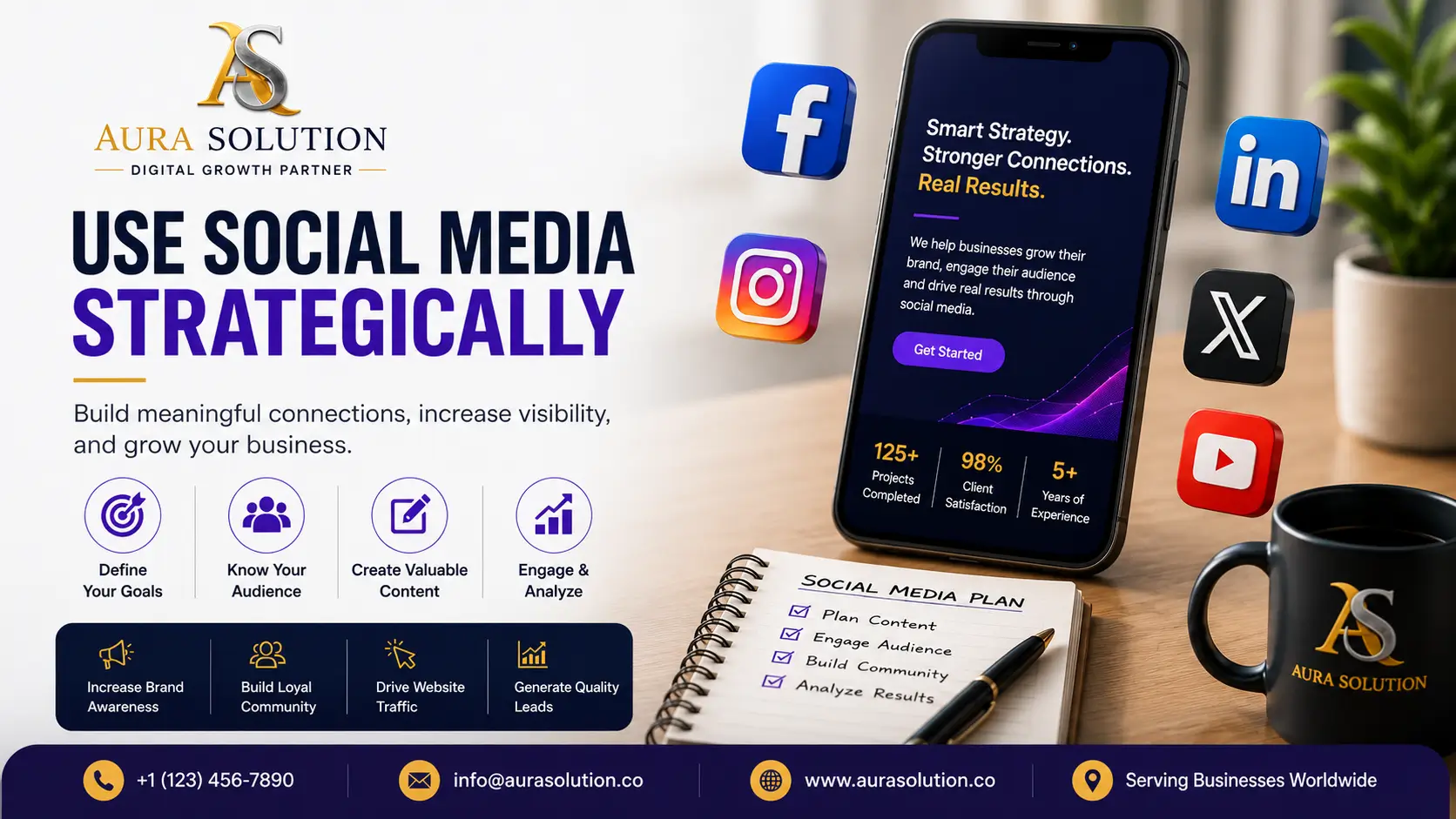
Use Social Media Strategically
Many small businesses make the mistake of trying to be active on every social platform.
Instead, focus on platforms where your audience spends time.
Social media can help businesses:
Increase brand awareness
Engage with customers
Share expertise
Promote content
Generate leads
Consistency is more important than quantity.
A focused strategy often delivers better results than attempting to manage multiple channels without clear goals.
Build Trust Through Reviews and Testimonials
Trust is one of the most important factors influencing purchasing decisions.
Customers often compare businesses before making a decision.
Positive reviews and testimonials help establish credibility.
Businesses should encourage satisfied customers to share their experiences.
Displaying reviews on your website and business profiles can significantly improve conversion rates.
Trust signals reassure potential customers that your business can deliver results.
Use Email Marketing to Nurture Leads
Email marketing remains one of the highest ROI marketing channels.
Not every visitor is ready to buy immediately.
Email marketing allows businesses to stay connected and build relationships over time.
Benefits include:
Lead nurturing
Customer retention
Brand awareness
Repeat business
Promotional opportunities
Building an email list creates a valuable asset that businesses own and control.
Monitor and Measure Performance
Successful digital marketing requires continuous improvement.
Businesses should regularly track:
Website traffic
Lead generation
Conversion rates
Keyword rankings
User behavior
Social media engagement
Data helps identify what is working and where improvements are needed.
The most successful businesses make decisions based on performance rather than assumptions.
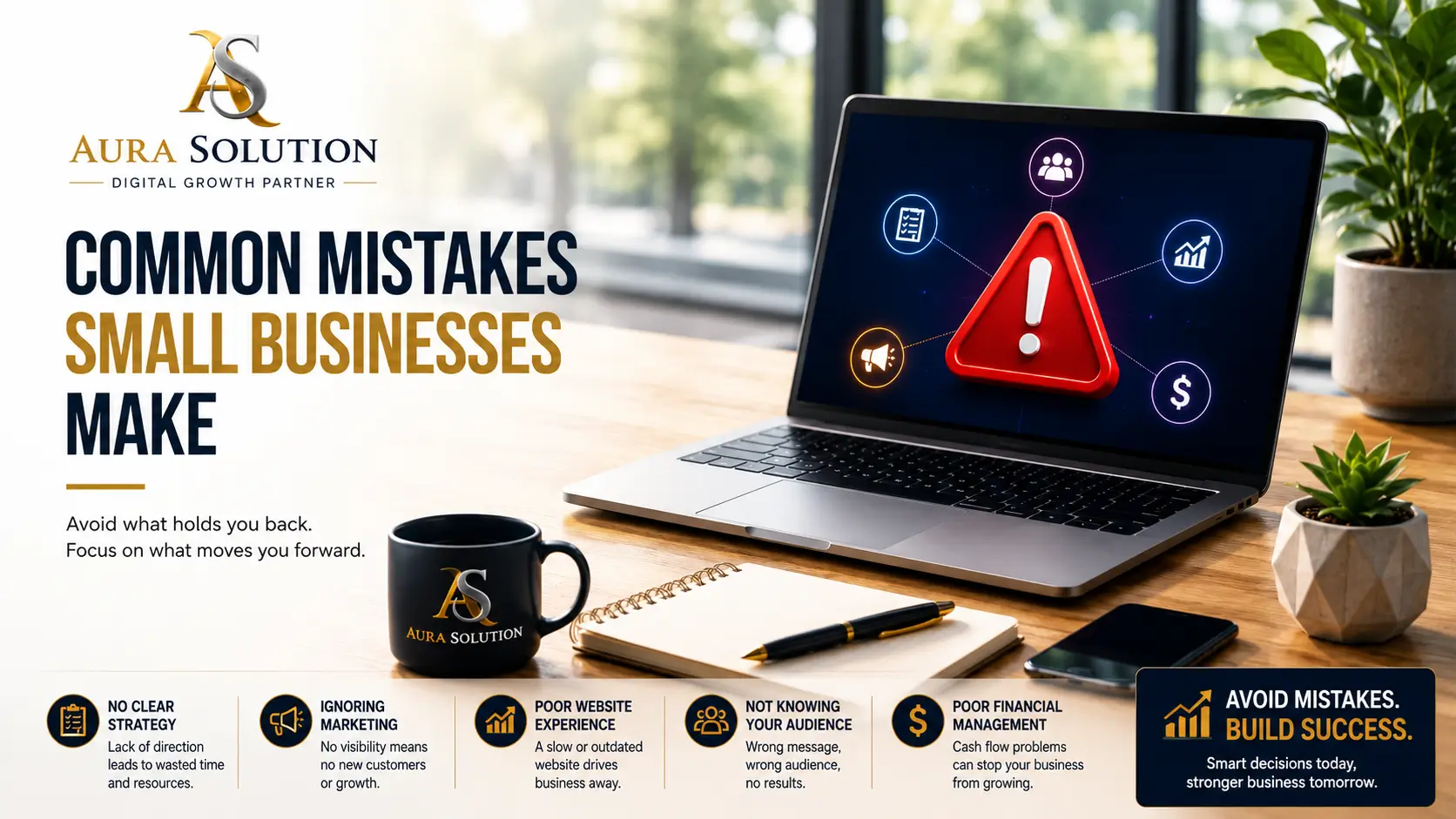
Common Mistakes Small Businesses Make
Trying to Compete on Budget Alone
Large corporations often have greater advertising budgets.
Small businesses should focus on specialization, service quality, and customer experience rather than trying to outspend competitors.
Ignoring SEO
Many businesses rely entirely on paid advertising.
Without SEO, businesses may miss opportunities for long term organic growth.
Inconsistent Marketing Efforts
Marketing requires consistency.
Publishing content or running campaigns sporadically often produces limited results.
Neglecting Website Experience
Even strong marketing campaigns can fail if the website provides a poor user experience.
Your website should support and enhance all marketing efforts.
How Digital Marketing Supports Long Term Growth
Digital marketing creates a foundation for sustainable growth.
Unlike one time advertising campaigns, digital assets such as content, SEO, and email lists continue delivering value over time.
Benefits include:
Increased visibility
Better customer relationships
Consistent lead generation
Improved brand authority
Higher conversion rates
Small businesses that invest consistently often achieve significant growth over the long term.
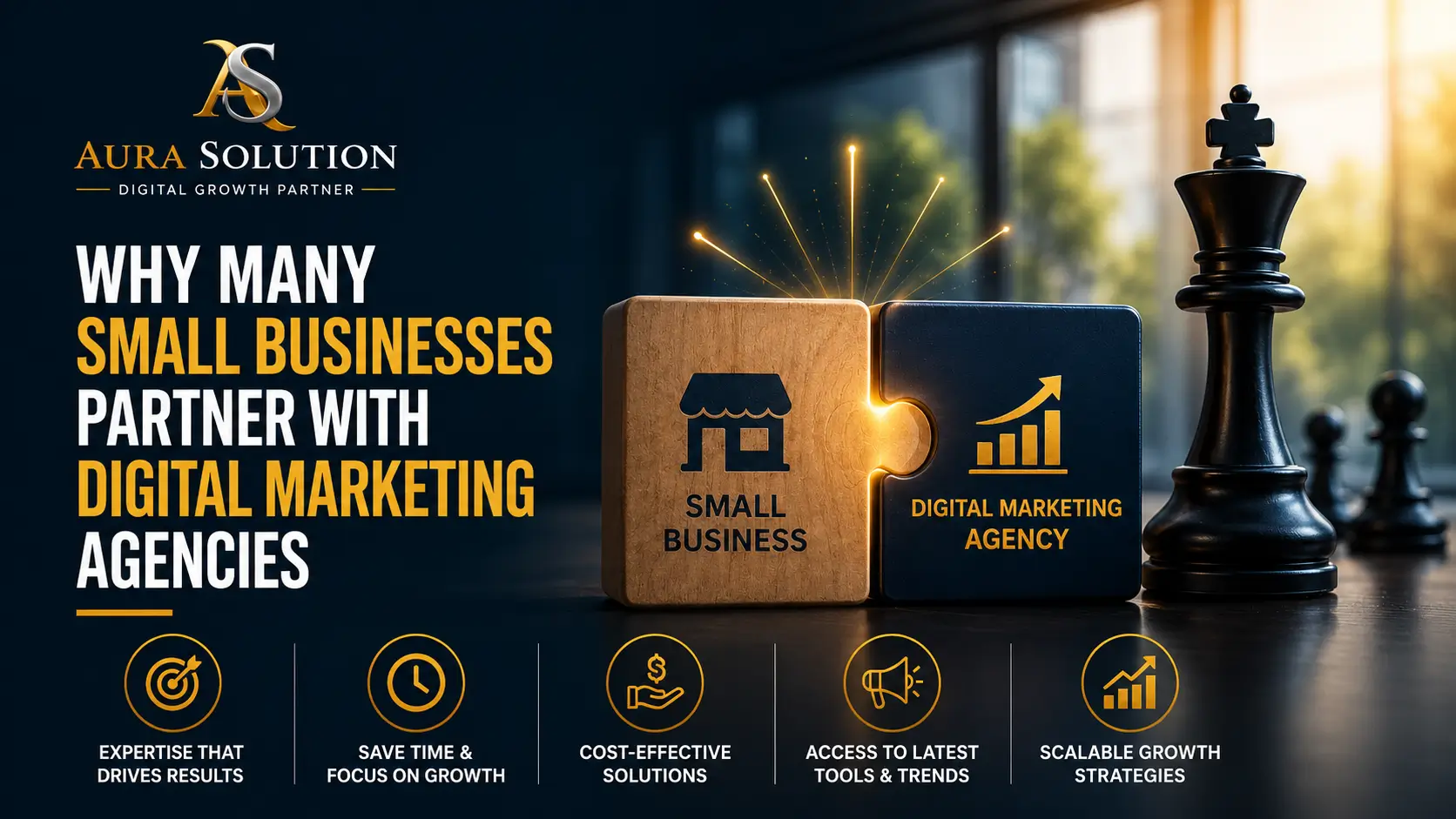
Why Many Small Businesses Partner With Digital Marketing Agencies
Managing SEO, content creation, social media, and website optimization can be time consuming.
Many business owners prefer to focus on operations while professionals handle digital marketing.
Experienced agencies provide:
Strategic planning
Technical expertise
Performance monitoring
Campaign optimization
Lead generation support
Businesses across the United States often work with Aura Solution to create customized digital marketing strategies that align with their growth goals.
Final Thoughts
Competing with larger brands online is not about having the biggest budget. It is about having the smartest strategy.
By investing in SEO, content marketing, local visibility, website optimization, and customer relationships, small businesses can attract customers and grow sustainably.
The digital landscape provides opportunities for businesses of all sizes. Those that focus on delivering value, building trust, and maintaining consistency are often the ones that achieve long term success.
In 2026, small businesses have more tools and opportunities than ever before to compete and thrive online.
FAQs
Can small businesses really compete with large brands online?
Yes. Digital marketing allows businesses to target specific audiences, build authority, and generate leads without requiring massive budgets.
What is the most effective digital marketing strategy for small businesses?
A combination of SEO, local SEO, content marketing, and website optimization typically delivers strong long term results.
How long does it take to see results from digital marketing?
Results vary by strategy. Paid advertising can generate immediate traffic, while SEO and content marketing often require several months to build momentum.
Is digital marketing worth the investment for small businesses?
Yes. Digital marketing helps businesses increase visibility, attract customers, and create sustainable growth opportunities.
aura solution
Web Developer
Explore More
Blogs

Why Every Business Needs a Mobile-Friendly Website in 2025
As smartphone usage continues to dominate web traffic, businesses that neglect their mobile presence r
Aura Solution
June 15. 2025

How to Choose the Right Digital Marketing Partner in the USA
Choosing a digital marketing agency is a major decision for any business. With so many options, how do you find ....
Aura Solution
31 May 2025

Top Digital Marketing Strategies That Drive Results for US Businesses in 2025
As we move through 2025, digital marketing continues to evolve at a rapid pace. With increased competition
Aura Solution
15 May 2025